Nee, Thebe
skakels
Street View
prente
artefakte
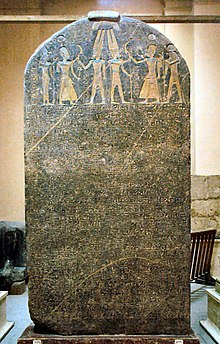
Merneptah Stele
Die Merneptah-stele, ook bekend as die Israel-stele of die Oorwinnings-stele van Merneptah, is 'n inskripsie deur Merneptah, 'n farao in antieke Egipte wat van 1213 tot 1203 v.C. geregeer het. Dit is in 1896 deur Flinders Petrie in Thebe ontdek en word nou in die Egiptiese Museum in Kaïro gehuisves.
Die teks is grotendeels 'n verslag van Merneptah se oorwinning oor die antieke Libiërs en hul bondgenote, maar die laaste drie van die 28 reëls handel oor 'n aparte veldtog in Kanaän, destyds deel van Egipte se keiserlike besittings. Dit word soms die "Israel-stele" genoem omdat 'n meerderheid van geleerdes 'n stel hiërogliewe in reël 27 as "Israel" vertaal. Alternatiewe vertalings is voorgestel, maar word nie wyd aanvaar nie.
Die stele verteenwoordig die vroegste teksverwysing na Israel en die enigste verwysing uit antieke Egipte. Dit is een van vier bekende inskripsies uit die Ystertydperk wat dateer uit die tyd van en antieke Israel by naam noem, met die ander drie wat die Mesha-stele, die Tel Dan-stele en die Kurkh-monoliete is. Gevolglik beskou sommige die Merneptah-stele as Petrie se beroemdste ontdekking, 'n mening waarmee Petrie self saamgestem het.
Wikipedia
Kaart
inligting uit woordeboek
No
or No-A'mon, the home of Amon, the name of Thebes, the ancient capital of what is called the Middle Empire, in Upper or Southern Egypt. "The multitude of No" (Jer 46:25 ) is more correctly rendered, as in the Revised Version, "Amon of No", i.e., No, where Jupiter Amon had his temple. In (Ezek 30:14; 30:16) it is simply called "No;" but in (Ezek 30:15) the name has the Hebrew Hamon prefixed to it, "Hamon No." This prefix is probably the name simply of the god usually styled Amon or Ammon. In (Nah 3:8 ) the "populous No" of the Authorized Version is in the Revised Version correctly rendered "No-Amon."
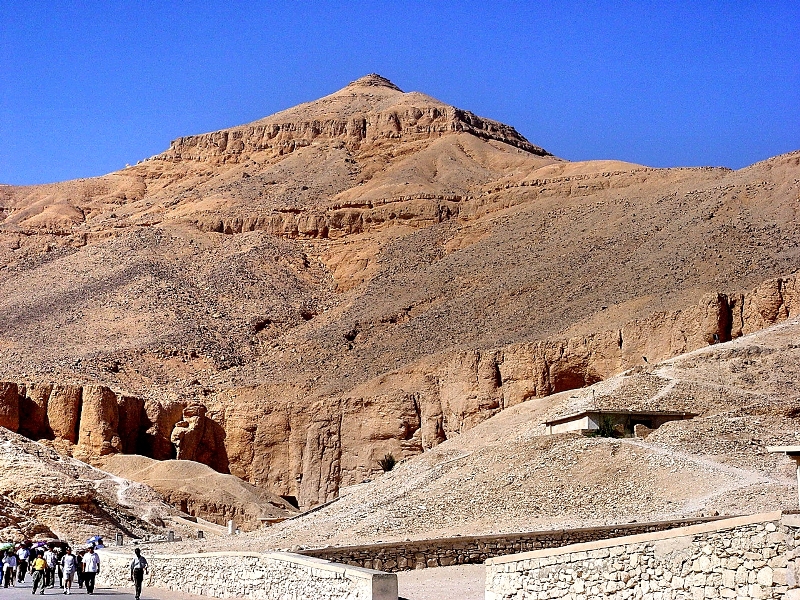
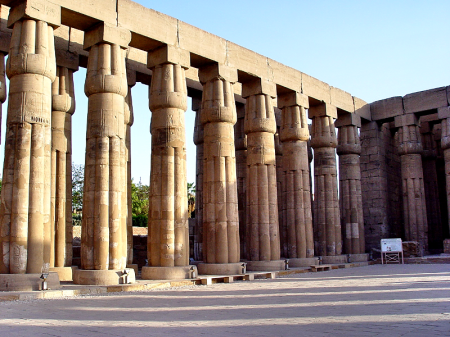
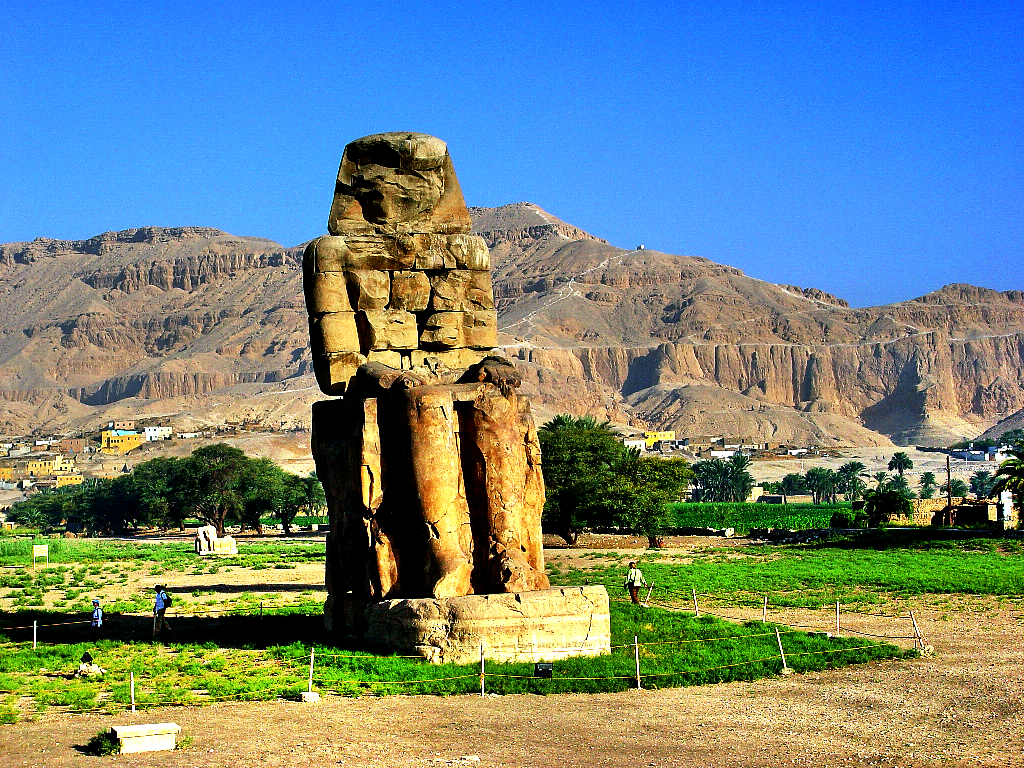
It was the Diospolis or Thebes of the Greeks, celebrated for its hundred gates and its vast population. It stood on both sides of the Nile, and is by some supposed to have included Karnak and Luxor. In grandeur and extent it can only be compared to Nineveh. It is mentioned only in the prophecies referred to, which point to its total destruction. It was first taken by the Assyrians in the time of Sargon (Isa 20:1etc.). It was afterwards "delivered into the hand" of Nebuchadnezzar and Assurbani-pal (Jer 46:25 ; 46:26). Cambyses, king of the Persians (B.C. 525), further laid it waste by fire. Its ruin was completed (B.C. 81) by Ptolemy Lathyrus. The ruins of this city are still among the most notable in the valley of the Nile. They have formed a great storehouse of interesting historic remains for more than two thousand years.
"As I wandered day after day with ever-growing amazement amongst these relics of ancient magnificence, I felt that if all the ruins in Europe, classical, Celtic, and medieval, were brought together into one centre, they would fall far short both in extent and grandeur of those of this single Egyptian city." Manning, The Land of the Pharaohs.
EBD - Easton's Bible Dictionary