hora Sínaj
Odkazy
Street View
Obrázky
Mapa
Informace ze slovníku
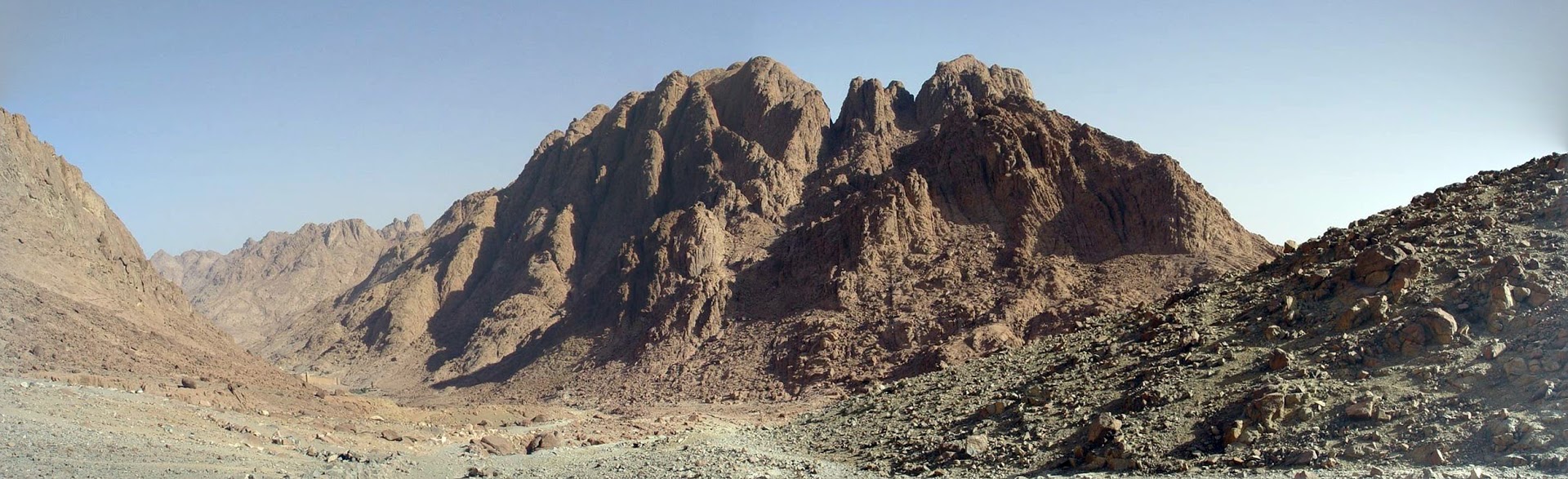
pohoří s mnoha vrcholy na j. polovici poloostrova Sinajského mezi zálivy Suezským a Akaba. Nejdůležitější vrcholy tohoto pohoří jsou: Džehel Musa (1528 m), jižněji položená hora sv. Kateřiny (2602 m), a Džebel Ser bal na severozápadu (2052 m). Zda DžebelMusa jest horou Oréb, na níž byl vydán Zákon, nelze přesně zjistiti. Někteří badatelé se domnívají, že planina er-Rácha na sz úpatí hory Ras-Sufsa (Rás es-Safsáfeh), jež tvořila protějšek hory Džebel Musa, byla místem, kde se utábořili Izraelci. Planina, zabírající asi 312 ha, má výbornou akustiku, takže se dobře hodila k předčítání Zákona i k táboření [Ex 19,2 ]. Celé to pohoří je divoké, skalnaté, prorvané úzkými, hlubokými údolími, kde zřídka teče voda. Skládá se z prahorních útvarů, na jižní straně přikrytých pískovcem anebo vápencem. Biblické zprávy udávají, že Izraelci sem dospěli třetího měsíce po odchodu z Egypta [Ex 19,1 ], že vzdálenost od Kádesbarne směrem od hory *Seir byla 11 dní [Dt 1,2 ], že vrchol hory byl viditelný z tábořiště [Ex 19,16 ; Ex 19,18 ; Ex 19,20 ], ač bylo těsně pod horou [Ex 19,2 ; Ex 19,12 ]. Zde se zběhly nejdůležitější události v dějinách lidu izraelského. Hospodin dal svému lidu Zákon a uzavřel s ním smlouvu, podle níž Bůh byl jediným králem Izraele [Ex 20,1 n] až [Ex 24,8 ]; zde byla vydána ustanovení pro izraelské soudnictví [Ex 24,12 ; Ex 31,18 ; Ex 34,2 ; Lv 1,1 ; Lv 16,1 ; Lv 25,1 ; Lv 26,46 ; Lv 27,34 ; Nu 1,1 ; Nu 9,1 ]. Zde se však také lid zpronevěřil Bohu a klaněl se zlatému teleti, když Mojžíš prodléval na hoře. Zde byl lid sečten a zorganisován, povinnosti levitů stanoveny a vše bylo uvedeno ve spořádané řády (Ex 19 - Nu 9). Tato posvátná krajina byla hned od počátku křesťanské éry poseta kostely a kláštery, jež leží nyní z větší části ve ssutinách; je zachován pouze klášter sv. Kateřiny, proslulý objevem Tischendorfovým z r. 1844 a 1859, jenž zde nalezl t. zv. Codex Sinaiticus, t. j. rukopis Písma ze 4. stol. Zde také objevila r. 1892 paní A. S. Lewisová rukopis, jenž obsahoval text starosyrského překladu evangelií (asi z konce 2. stol. po Kr.).
Zdroj: Biblický slovník (Adolf Novotný - 1956)
Sinai
of Sin (the moon god), called also Horeb, the name of the mountain district which was reached by the Hebrews in the third month after the Exodus. Here they remained encamped for about a whole year. Their journey from the Red Sea to this encampment, including all the windings of the route, was about 150 miles. The last twenty-two chapters of Exodus, together with the whole of Leviticus and Numeri chapter 1-11 [(Num 1:1 etc.) to (Num 11:1 etc.)], contain a record of all the transactions which occurred while they were here. From Rephidim (Ex 17:8 -13) the Israelites journeyed forward through the Wady Solaf and Wady esh-Sheikh into the plain of er-Rahah, "the desert of Sinai," about 2 miles long and half a mile broad, and encamped there "before the mountain." The part of the mountain range, a protruding lower bluff, known as the Ras Sasafeh (Sufsafeh), rises almost perpendicularly from this plain, and is in all probability the Sinai of history.
Dean Stanley thus describes the scene:, "The plain itself is not broken and uneven and narrowly shut in, like almost all others in the range, but presents a long retiring sweep, within which the people could remove and stand afar off. The cliff, rising like a huge altar in front of the whole congregation, and visible against the sky in lonely grandeur from end to end of the whole plain, is the very image of the 'mount that might be touched,' and from which the voice of God might be heard far and wide over the plain below." This was the scene of the giving of the law. From the Ras Sufsafeh the law was proclaimed to the people encamped below in the plain of er-Rahah. During the lengthened period of their encampment here the Israelites passed through a very memorable experience. An immense change passed over them. They are now an organized nation, bound by covenant engagement to serve the Lord their God, their ever-present divine Leader and Protector. At length, in the second month of the second year of the Exodus, they move their camp and march forward according to a prescribed order. After three days they reach the "wilderness of Paran," the "et-Tih", i.e., "the desert", and here they make their first encampment. At this time a spirit of discontent broke out amongst them, and the Lord manifested his displeasure by a fire which fell on the encampment and inflicted injury on them. Moses called the place Taberah (q.v.), (Num 11:1 -3). The journey between Sinai and the southern boundary of the Promised Land (about 150 miles) at Kadesh was accomplished in about a year. (See MAP The Table of Nations)
EBD - Easton's Bible Dictionary