Ninive
Popis
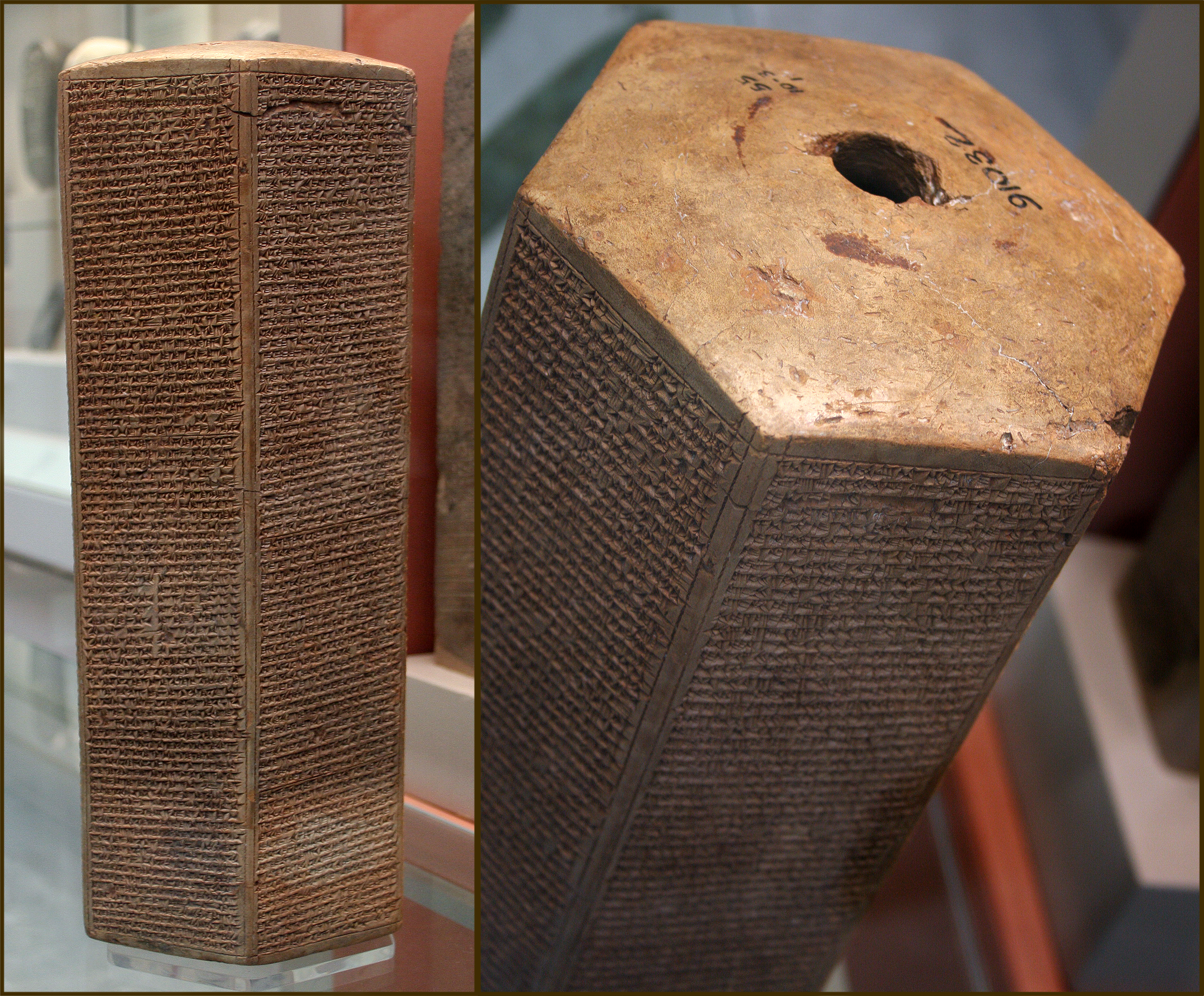
Sancheribovy letopisy jsou letopisy asyrského krále Sancheriba. Jsou nalezeny vyryté na několika artefaktech a finální verze byly nalezeny na třech hliněných prismatech s vyrytým stejným textem: Taylorův prismat je v Britském muzeu, Orientální institutní prismat v Orientálním institutu v Chicagu a Jeruzalémský prismat je v Izraelském muzeu v Jeruzalémě.
Taylorův prismat je jedním z nejstarších klínopisných artefaktů analyzovaných v moderní asyriologii, byl nalezen několik let před moderním rozluštěním klínopisu.
Samotné letopisy jsou pozoruhodné tím, že popisují Sancheribovo obléhání Jeruzaléma za vlády krále Ezechiáše. Tato událost je zaznamenána v několika knihách obsažených v Bibli, včetně knihy Izajáš kapitoly [Iz 36:1 ] a [Iz 37:1 ]; [2Kr 18:17 ; 2Pa 32:9 ]. Invaze je zmíněna Herodotem, který se nezmiňuje o Judsku a říká, že invaze skončila v Pelusiu na okraji nilské delty.
Wikipedie
Odkazy
Street View
Artefakty
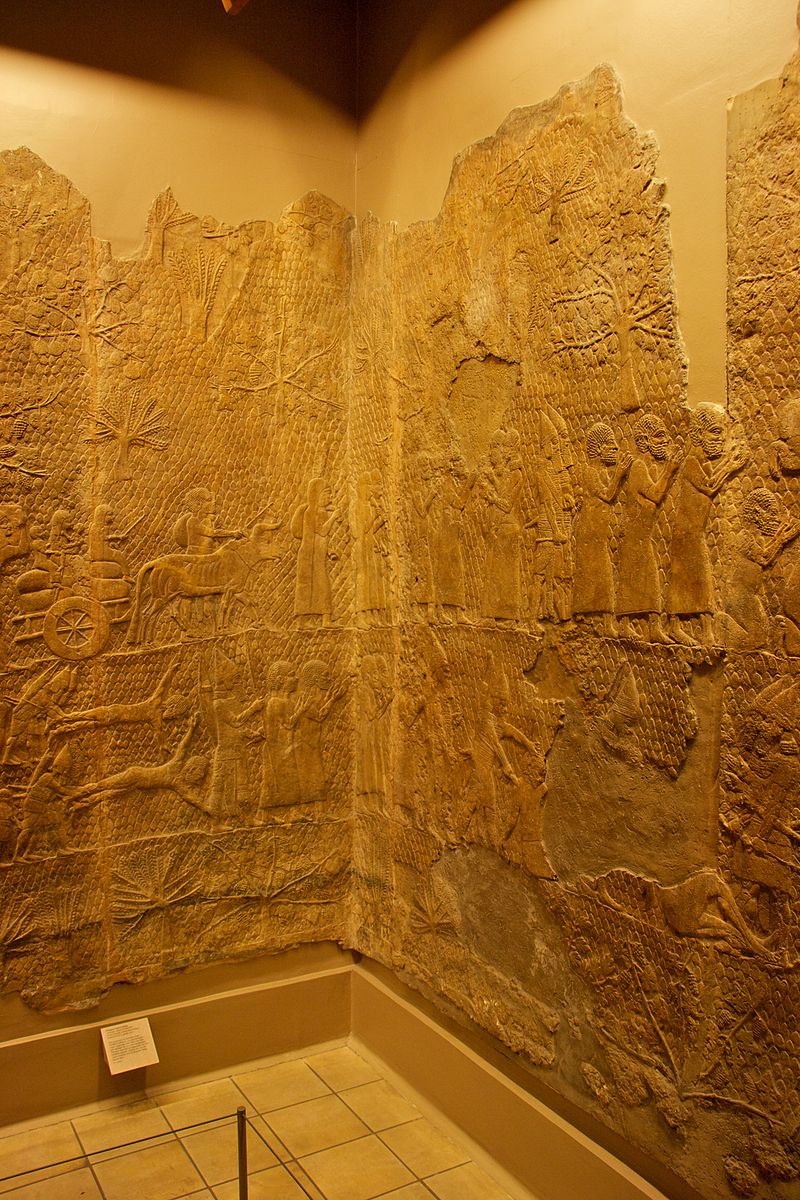
Lachišské reliéfy
Část Sennacheribova reliéfu, který zobrazuje judské zajatce odváděné do zajetí po obléhání Lachiše v roce 701 př. n. l.
Mapa
Informace ze slovníku
město, založené podle biblické tradice Nimrodem na levém [východním] břehu Tigridu naproti nynějšímu Mosulu [Gn 10,11 ; Jon 1,2 ]. Ochranným božstvem tu byla Ištar, jíž vystavěl koncem 3. tisíciletí př. Kr. chrám Maništusu, král semitské dynastie Akkadské. Churrijci pak a Hetejci rozšířili kult Ištařin až do Malé Asie a do Egypta. N. záhy předčilo významem staré hlavní město Assur, ležící asi 96 km jižněji, zvláště když si v něm vystavěl Salmanazar [1280-1260] skvělý palác. Assurnazirpal III. [884 až 859] a jeho nástupce Salmanazar III. [859-824] si vystavěli paláce jak v Ninive, tak v *Chále [Gn 10,11 ] a sídleli střídavě v obou. Jejich nástupci považovali N. za hlavní město. Senacherib [705 až 681] si tu vystavěl dva paláce: Kujundžik a Nabi Junus [prorok Jonáš], obehnal město pevnými hradbami a zřídil vodovod. Byl zavražděn v chrámě *Nizrochově v Ninive [2Kr 19,37 ]. Asurbanipal [668-626] založil ve svém paláci velkolepou knihovnu z 22.000 hliněných tabulek, částečně kopií památek starobabylonských.

Plán vykopávek starého Ninive. Podle Christiana. A. Kujundžik, pahorek paláců, a. Senacheribův palác, b. Chrám bohyně Ištar. c. Chrám boha Nabu. d. Asurbanipalův palác. B. Pahorek Nebi Junus (podle Jonáše), v něm dosud neodkryté zříceniny. C. Chrámový okrsek, také neodkrytý. D. Vykopané části vnitřních hradeb. E. Vnější hradby. 1-15. Městské brány pojmenované většinou podle božstev a králů: Měsíce (Sin), Nergalova, Adadova, brána Šibaniba, t. j. vedoucí k obilnímu trhu, Halahhi, vedoucí do Halah, Mušlalum, k půlměsícové baště Mušlal, Ninlilova, Šamašova, Senacheribova, Aššurova, Šarurova, palácová, pouště, jízdní, Eova.

Části velkého frýsu ze Senacheribova paláce v Kujundžiku, zobrazující ukrutnosti páchané Assyřany na poražených i mrtvých nepřátelích.
Prorok Nahum [Na 3,1 ] nazývá N. »městem vražedným«, patrně pro mnohé krvavé války proti sousedům a pro ukrutnosti vítězů. Asurbanipal na př. měl ve zvyku zutínati ruce, nohy, nos a uši poražených, z jejichž hlav navršoval vysoké hromady. R. 625 př. Kr. začala moc assyrská klesat. Nejprve se osamostatnil Nabupolasar [626-605] a r. 612 spolu s jinými vyvrátil N. Napomohlo tomu i rozvodnění Tigridu, jež podvrátilo velkou část jeho hradeb. Město zdánlivě zmizelo s povrchu zemského. Teprve francouzský konsul M. Botta odkryl r. 1843 v pahorku 18 m vysokém veliký palác se souvisícími komnatami a síněmi, jejichž stěny byly obloženy sádrovými nebo alabastrovými deskami a četnými freskami a ornamenty. U vchodu a na schodišti byly okřídlené sfingy, býci a lvi obrovských rozměrů. V dalších objevech se pokračovalo v letech 1845-50, 1874, 1878. Podařilo se rozluštiti klínové nápisy. Podle těchto objevů a vykopávek bylo zřejmě Ninive městem, obehnaným vysokými náspy v nepravidelném čtyřúhelníku: severní strana jest 2300 m, západní 4500 m, jižní 1000 m a východní kruhovitě zakřivená 5200 m, dohromady 13.000 m, t. j. 13 km. Výška hradeb byla 10-15 m. Na východní straně jsou před hradbami ještě příkopy a bašty, kdežto na záp. straně přiléhaly hradby přímo k řece. Při velkém rozvodnění Tigridu byly příkopy naplněny vodou tak, že se okolí města podobalo velkému jezeru [Na 2,8 ]. Na hradbách jsou v pravidelných vzdálenostech věže 40-50 m vysoké, na rozích vyšší a silnější. Vše bylo stavěno z nepálených cihel [vepřovic]. Biblické vztahy mezi Izraelem a Ninivetskými [Assyrskými] jsou dosti četné: [Nu 24,22 - Nu 24,24 ; Ž 83,9 ; Jon 1,1 n; 3,1n; 4,1n]; sr. [Mt 12,41 ; L 11,30]; [Iz 37,37 ]. Z proroků hlavně Nahum a Sofoniáš prorokovali zkázu města [Na 1,8 - Na 1,9 ; Na 3,18 - Na 3,19 ; Sof 2,13 - Sof 2,15 ]. Zajímavé jsou biblické zmínky o způsobech obyvatel tohoto města: [Na 2,3 ; Na 3,1 - Na 3,3 ; Iz 37,33 ]. Ozdoba stěn místností jest popsána v [Ez 23,14 - Ez 23,15 ]. Vykopávky a nápisy značně pomohly k upevnění dějinných dat staré Assyrie a Babylonie. Nápisy na stěnách popisují činy králů. Nejchlubnější jest popis výprav a vítězství Senacheribových, kde se dovídáme také o panovnících judských.
Zdroj: Biblický slovník (Adolf Novotný - 1956)
Nineveh
First mentioned in (Gen 10:11 ), which is rendered in the Revised Version, "He [i.e., Nimrod] went forth into Assyria and builded Nineveh." It is not again noticed till the days of Jonah, when it is described (Jonah 3:3; 4:11) as a great and populous city, the flourishing capital of the Assyrian empire (2Kings 19:36; Isa 37:37). The book of the prophet Nahum is almost exclusively taken up with prophetic denunciations against this city. Its ruin and utter desolation are foretold (Nah 1:14 ; 3:19), etc. Zephaniah also (Zeph 2:13-15) predicts its destruction along with the fall of the empire of which it was the capital. From this time there is no mention of it in Scripture till it is named in gospel history (Matt 12:41; Luke 11:32).
This "exceeding great city" lay on the eastern or left bank of the river Tigris, along which it stretched for some 30 miles, having an average breadth of 10 miles or more from the river back toward the eastern hills. This whole extensive space is now one immense area of ruins. Occupying a central position on the great highway between the Mediterranean and the Indian Ocean, thus uniting the East and the West, wealth flowed into it from many sources, so that it became the greatest of all ancient cities.
About B.C. 633 the Assyrian empire began to show signs of weakness, and Nineveh was attacked by the Medes, who subsequently, about B.C. 625, being joined by the Babylonians and Susianians, again attacked it, when it fell, and was razed to the ground. The Assyrian empire then came to an end, the Medes and Babylonians dividing its provinces between them. "After having ruled for more than six hundred years with hideous tyranny and violence, from the Caucasus and the Caspian to the Persian Gulf, and from beyond the Tigris to Asia Minor and Egypt, it vanished like a dream" (Nah 2:6 -11). Its end was strange, sudden, tragic. It was God's doing, his judgement on Assyria's pride (Isa 10:5-19).
Forty years ago our knowledge of the great Assyrian empire and of its magnificent capital was almost wholly a blank. Vague memories had indeed survived of its power and greatness, but very little was definitely known about it. Other cities which had perished, as Palmyra, Persepolis, and Thebes, had left ruins to mark their sites and tell of their former greatness; but of this city, imperial Nineveh, not a single vestige seemed to remain, and the very place on which it had stood was only matter of conjecture. In fulfilment of prophecy, God made "an utter end of the place." It became a "desolation."
In the days of the Greek historian Herodotus, B.C. 400, it had become a thing of the past; and when Xenophon the historian passed the place in the "Retreat of the Ten Thousand," the very memory of its name had been lost. It was buried out of sight, and no one knew its grave. It is never again to rise from its ruins.
At length, after being lost for more than two thousand years, the city was disentombed. A little more than forty years ago the French consul at Mosul began to search the vast mounds that lay along the opposite bank of the river. The Arabs whom he employed in these excavations, to their great surprise, came upon the ruins of a building at the mound of Khorsabad, which, on further exploration, turned out to be the royal palace of Sargon, one of the Assyrian kings. They found their way into its extensive courts and chambers, and brought forth form its hidded depths many wonderful sculptures and other relics of those ancient times.
The work of exploration has been carried on almost continuously by M. Botta, Sir Henry Layard, George Smith, and others, in the mounds of Nebi-Yunus, Nimrud, Koyunjik, and Khorsabad, and a vast treasury of specimens of old Assyrian art has been exhumed. Palace after palace has been discovered, with their decorations and their sculptured slabs, revealing the life and manners of this ancient people, their arts of war and peace, the forms of their religion, the style of their architecture, and the magnificence of their monarchs. The streets of the city have been explored, the inscriptions on the bricks and tablets and sculptured figures have been read, and now the secrets of their history have been brought to light.
One of the most remarkable of recent discoveries is that of the library of King Assur-bani-pal, or, as the Greek historians call him, Sardanapalos, the grandson of Sennacherib (q.v.). (See ASNAPPER) This library consists of about ten thousand flat bricks or tablets, all written over with Assyrian characters. They contain a record of the history, the laws, and the religion of Assyria, of the greatest value. These strange clay leaves found in the royal library form the most valuable of all the treasuries of the literature of the old world. The library contains also old Accadian documents, which are the oldest extant documents in the world, dating as far back as probably about the time of Abraham. (See SARGON)
"The Assyrian royalty is, perhaps, the most luxurious of our century [reign of Assur-bani-pal]...Its victories and conquests, uninterrupted for one hundred years, have enriched it with the spoil of twenty peoples. Sargon has taken what remained to the Hittites; Sennacherib overcame Chaldea, and the treasures of Babylon were transferred to his coffers; Esarhaddon and Assur-bani-pal himself have pillaged Egypt and her great cities, Sais, Memphis, and Thebes of the hundred gates...Now foreign merchants flock into Nineveh, bringing with them the most valuable productions from all countries, gold and perfume from South Arabia and the Chaldean Sea, Egyptian linen and glass-work, carved enamels, goldsmiths' work, tin, silver, Phoenician purple; cedar wood from Lebanon, unassailable by worms; furs and iron from Asia Minor and Armenia" (Ancient Egypt and Assyria, by G. Maspero, page 271).
The bas-reliefs, alabaster slabs, and sculptured monuments found in these recovered palaces serve in a remarkable manner to confirm the Old Testament history of the kings of Israel. The appearance of the ruins shows that the destruction of the city was due not only to the assailing foe but also to the flood and the fire, thus confirming the ancient prophecies concerning it. "The recent excavations," says Rawlinson, "have shown that fire was a great instrument in the destruction of the Nineveh palaces. Calcined alabaster, charred wood, and charcoal, colossal statues split through with heat, are met with in parts of the Nineveh mounds, and attest the veracity of prophecy."
Nineveh in its glory was (Jonah 3:4) an "exceeding great city of three days' journey", i.e., probably in circuit. This would give a circumference of about 60 miles. At the four corners of an irregular quadrangle are the ruins of Kouyunjik, Nimrud, Karamless and Khorsabad. These four great masses of ruins, with the whole area included within the parallelogram they form by lines drawn from the one to the other, are generally regarded as composing the whole ruins of Nineveh.
EBD - Easton's Bible Dictionary