Gomer
Odkazy
Obrázky
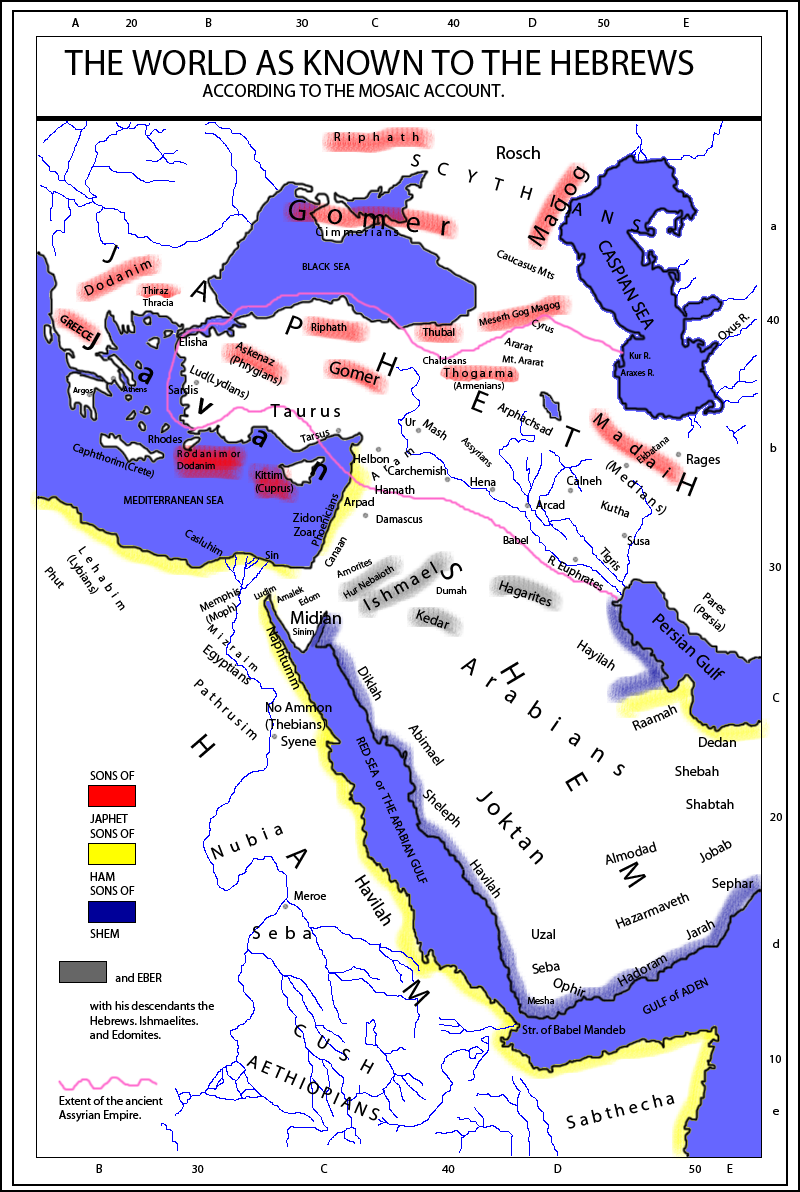
Mapa
Informace ze slovníku
[snad = dokončený či poslední?], nejstarší syn Jafetův a otec Asceneze, Difata [Rifata] a Togorma [Gn 10,2 .3; 1Pa 1,5 ]. Jeho jméno uvádí se ještě v [Ez 38,6 ] jako spojence nebo podřízeného krále *Goga. Všeobecně se pokládá za praotce pozdějších Gimbrů a ostatních větví Keltů či Gallů, kteří se přistěhovali do Asie [Kappadocie] ze Zakavkazska, ohrožovali Assyrii, byli však poraženi; zaplavili Malou Asii, zabili krále lydského Gyga, jehož jméno někteří badatelé vidí v bibl. Gogovi. Nakonec však byli z Malé Asie vypuzeni. U Ez však není radno počítati přespříliš s nimi jako s historicky konkretisovatelným nepřítelem. Viz *Gog.
Gomer 2
dutá míra pro sypké látky = jeden issaron [Ex 16,16 .36], je desátý díl efi = asi 3,60 1. 10 efů = Chomer = 360 1. *Míry.
Zdroj: Biblický slovník (Adolf Novotný - 1956)
Gomer
complete; vanishing.
(1.) The daughter of Diblaim, who (probably in vision only) became the wife of Hosea (Hos 1:3).
(2.) The eldest son of Japheth, and father of Ashkenaz, Riphath, and Togarmah (Gen 10:2 ; 10:3), whose descendants formed the principal branch of the population of South-eastern Europe. He is generally regarded as the ancestor of the Celtae and the Cimmerii, who in early times settled to the north of the Black Sea, and gave their name to the Crimea, the ancient Chersonesus Taurica. Traces of their presence are found in the names Cimmerian Bosphorus, Cimmerian Isthmus, etc. In the seventh century B.C. they were driven out of their original seat by the Scythians, and overran western Asia Minor, whence they were afterwards expelled. They subsequently reappear in the times of the Romans as the Cimbri of the north and west of Europe, whence they crossed to the British Isles, where their descendants are still found in the Gaels and Cymry. Thus the whole Celtic race may be regarded as descended from Gomer.
EBD - Easton's Bible Dictionary