Tebo
ligiloj
Street View
bildoj
artefaktoj
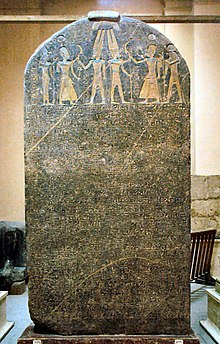
Merneptah-stelo
La Steleo de Merneptah, ankaŭ konata kiel la Steleo de Izrael aŭ la Venka Steleo de Merneptah, estas surskribo de Merneptah, faraono en antikva Egiptio kiu regis de 1213 ĝis 1203 a.K. Malkovrita de Flinders Petrie en Teboj en 1896, ĝi nun troviĝas en la Egipta Muzeo en Kairo.
La teksto estas ĉefe raporto pri la venko de Merneptah super la antikvaj Libianoj kaj iliaj aliancanoj, sed la lastaj tri el la 28 linioj traktas apartan kampanjon en Kanaano, tiam parto de la imperiaj posedaĵoj de Egiptio. Ĝi estas foje nomata la "Steleo de Izrael" ĉar plimulto de fakuloj tradukas aron da hieroglifoj en linio 27 kiel "Izrael". Alternativaj tradukoj estis proponitaj sed ne estas vaste akceptitaj.
La steleo reprezentas la plej fruan tekstan referencon al Izrael kaj la solan referencon el antikva Egiptio. Ĝi estas unu el kvar konataj surskriboj el la Ferepoko, kiuj datiĝas al la tempo de kaj mencias antikvan Izraelon laŭnome, kun la aliaj estantaj la Steleo de Mesha, la Steleo de Tel Dan, kaj la Monolitoj de Kurkh. Sekve, iuj konsideras la Steleon de Merneptah kiel la plej fama malkovro de Petrie, opinio kun kiu Petrie mem konsentis.
Vikipedio
Mapo
informoj el vortaro
No
or No-A'mon, the home of Amon, the name of Thebes, the ancient capital of what is called the Middle Empire, in Upper or Southern Egypt. "The multitude of No" (Jer 46:25 ) is more correctly rendered, as in the Revised Version, "Amon of No", i.e., No, where Jupiter Amon had his temple. In (Ezek 30:14; 30:16) it is simply called "No;" but in (Ezek 30:15) the name has the Hebrew Hamon prefixed to it, "Hamon No." This prefix is probably the name simply of the god usually styled Amon or Ammon. In (Nah 3:8) the "populous No" of the Authorized Version is in the Revised Version correctly rendered "No-Amon."
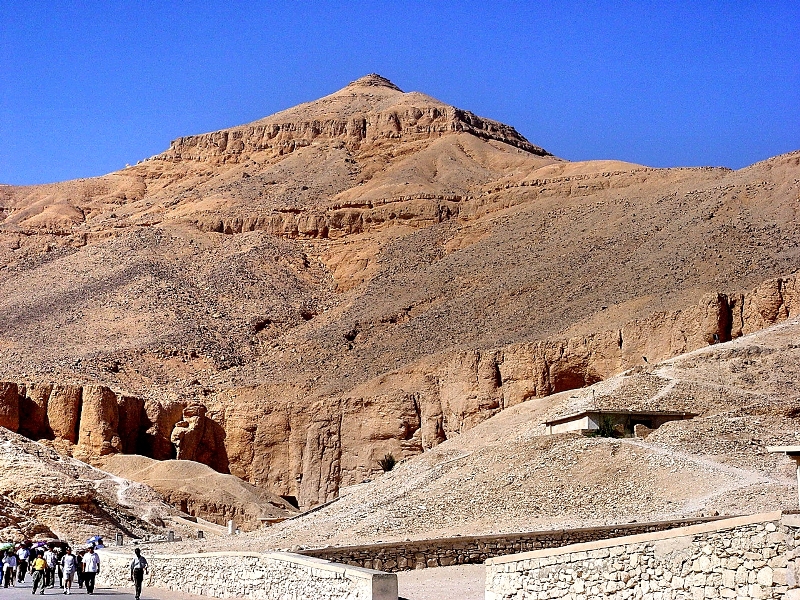
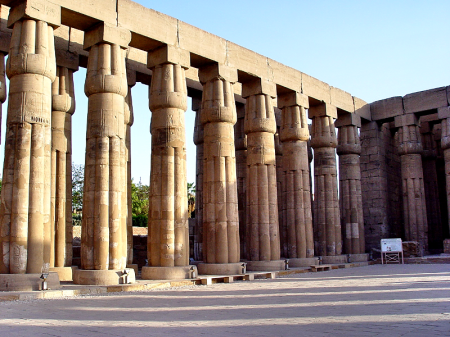
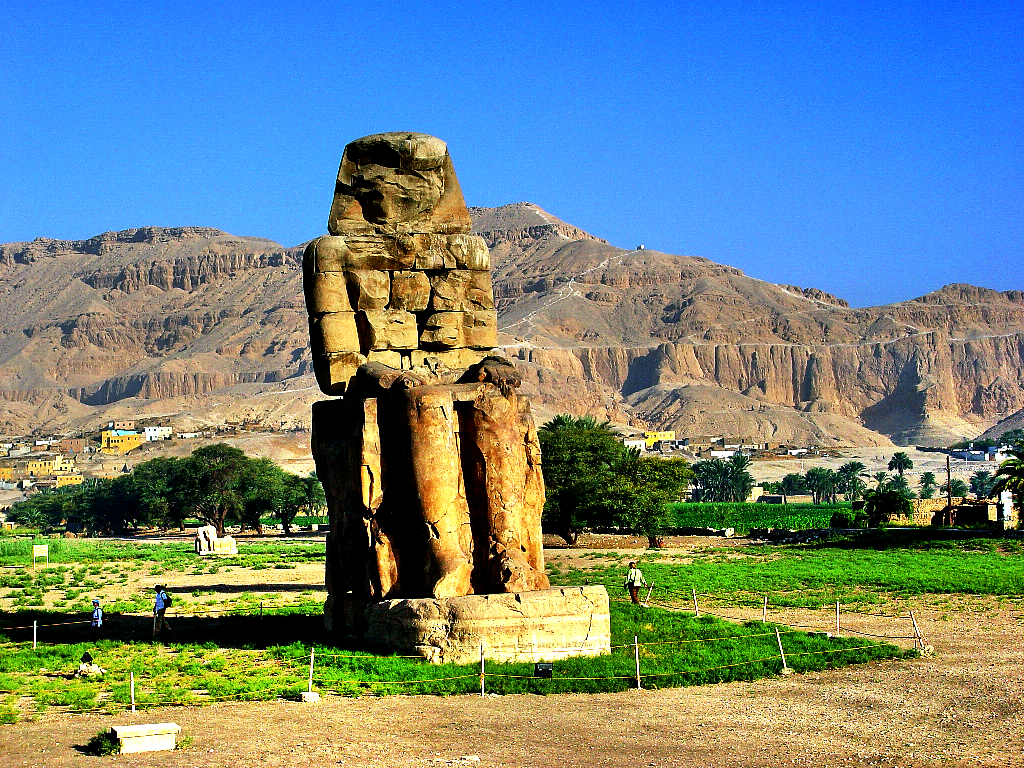
It was the Diospolis or Thebes of the Greeks, celebrated for its hundred gates and its vast population. It stood on both sides of the Nile, and is by some supposed to have included Karnak and Luxor. In grandeur and extent it can only be compared to Nineveh. It is mentioned only in the prophecies referred to, which point to its total destruction. It was first taken by the Assyrians in the time of Sargon (Isa 20:1etc.). It was afterwards "delivered into the hand" of Nebuchadnezzar and Assurbani-pal (Jer 46:25 ; 46:26). Cambyses, king of the Persians (B.C. 525), further laid it waste by fire. Its ruin was completed (B.C. 81) by Ptolemy Lathyrus. The ruins of this city are still among the most notable in the valley of the Nile. They have formed a great storehouse of interesting historic remains for more than two thousand years.
"As I wandered day after day with ever-growing amazement amongst these relics of ancient magnificence, I felt that if all the ruins in Europe, classical, Celtic, and medieval, were brought together into one centre, they would fall far short both in extent and grandeur of those of this single Egyptian city." Manning, The Land of the Pharaohs.
EBD - Easton's Bible Dictionary