Theba
linkit
Street View
kuvat
artefaktit
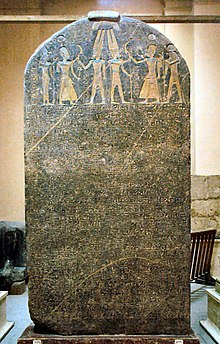
Merneptahin steela
Merneptah-stele, tunnetaan myös nimellä Israel-stele tai Merneptahin voittostele, on muinaisen Egyptin faaraon Merneptahin laatima kirjoitus, joka hallitsi vuosina 1213–1203 eaa. Flinders Petrie löysi sen Thebasta vuonna 1896, ja se on nyt esillä Egyptiläisessä museossa Kairossa.
Teksti on suurelta osin kertomus Merneptahin voitosta muinaisista libyalaisista ja heidän liittolaisistaan, mutta viimeiset kolme 28 rivistä käsittelevät erillistä kampanjaa Kanaaninmaassa, joka oli tuolloin osa Egyptin keisarillisia alueita. Sitä kutsutaan joskus "Israel-steleksi", koska useimmat tutkijat kääntävät rivillä 27 olevan hieroglyfijoukon "Israeli"ksi. Vaihtoehtoisia käännöksiä on esitetty, mutta ne eivät ole laajalti hyväksyttyjä.
Stele edustaa varhaisinta tekstiviittausta Israeliin ja ainoaa viittausta muinaisesta Egyptistä. Se on yksi neljästä tunnetusta rautakauden kirjoituksesta, jotka ajoittuvat muinaisen Israelin aikaan ja mainitsevat sen nimeltä, muiden ollessa Mesha-stele, Tel Dan-stele ja Kurkh-monoliitit. Tämän vuoksi jotkut pitävät Merneptah-steleä Petrien kuuluisimpana löytönä, ja Petrie itse oli samaa mieltä tästä näkemyksestä.
Wikipedia
Kartta
tietoa sanakirjasta
No
or No-A'mon, the home of Amon, the name of Thebes, the ancient capital of what is called the Middle Empire, in Upper or Southern Egypt. "The multitude of No" (Jer 46:25 ) is more correctly rendered, as in the Revised Version, "Amon of No", i.e., No, where Jupiter Amon had his temple. In (Ezek 30:14; 30:16) it is simply called "No;" but in (Ezek 30:15) the name has the Hebrew Hamon prefixed to it, "Hamon No." This prefix is probably the name simply of the god usually styled Amon or Ammon. In (Nah 3:8) the "populous No" of the Authorized Version is in the Revised Version correctly rendered "No-Amon."
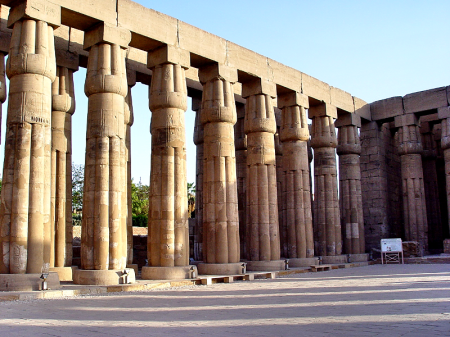
It was the Diospolis or Thebes of the Greeks, celebrated for its hundred gates and its vast population. It stood on both sides of the Nile, and is by some supposed to have included Karnak and Luxor. In grandeur and extent it can only be compared to Nineveh. It is mentioned only in the prophecies referred to, which point to its total destruction. It was first taken by the Assyrians in the time of Sargon (Isa 20:1etc.). It was afterwards "delivered into the hand" of Nebuchadnezzar and Assurbani-pal (Jer 46:25 ; 46:26). Cambyses, king of the Persians (B.C. 525), further laid it waste by fire. Its ruin was completed (B.C. 81) by Ptolemy Lathyrus. The ruins of this city are still among the most notable in the valley of the Nile. They have formed a great storehouse of interesting historic remains for more than two thousand years.
"As I wandered day after day with ever-growing amazement amongst these relics of ancient magnificence, I felt that if all the ruins in Europe, classical, Celtic, and medieval, were brought together into one centre, they would fall far short both in extent and grandeur of those of this single Egyptian city." Manning, The Land of the Pharaohs.
EBD - Easton's Bible Dictionary