לא, תבאי
קישורים
Street View
תמונות
חפצים
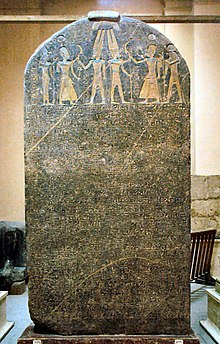
מצבת מרנפתח
מצבת מרנפתח, הידועה גם כמצבת ישראל או מצבת הניצחון של מרנפתח, היא כתובת שנכתבה על ידי מרנפתח, פרעה במצרים העתיקה ששלט בין השנים 1213 ל-1203 לפנה"ס. היא התגלתה על ידי פלינדרס פיטרי בתבאי בשנת 1896, וכיום היא מוצגת במוזיאון המצרי בקהיר.
הטקסט הוא בעיקרו תיאור של ניצחונו של מרנפתח על הלובים הקדומים ובני בריתם, אך שלוש השורות האחרונות מתוך 28 השורות עוסקות במסע נפרד בכנען, שהייתה אז חלק מהאימפריה המצרית. לעיתים היא מכונה "מצבת ישראל" מכיוון שרוב החוקרים מתרגמים סט הירוגליפים בשורה 27 כ"ישראל". תרגומים חלופיים הוצעו אך אינם מקובלים באופן רחב.
המצבה מייצגת את האזכור הטקסטואלי המוקדם ביותר לישראל והאזכור היחיד ממצרים העתיקה. היא אחת מארבע כתובות ידועות מתקופת הברזל המתוארכות לאותה תקופה ומזכירות את ישראל הקדומה בשמה, כאשר האחרות הן מצבת מישע, מצבת תל דן, ומונוליתים של קורח. כתוצאה מכך, יש הרואים במצבת מרנפתח את התגלית המפורסמת ביותר של פיטרי, דעה שפיטרי עצמו הסכים עמה.
ויקיפדיה
מפה
מידע מהמילון
No
or No-A'mon, the home of Amon, the name of Thebes, the ancient capital of what is called the Middle Empire, in Upper or Southern Egypt. "The multitude of No" (Jer 46:25) is more correctly rendered, as in the Revised Version, "Amon of No", i.e., No, where Jupiter Amon had his temple. In (Ezek 30:14; 30:16) it is simply called "No;" but in (Ezek 30:15) the name has the Hebrew Hamon prefixed to it, "Hamon No." This prefix is probably the name simply of the god usually styled Amon or Ammon. In (Nah 3:8) the "populous No" of the Authorized Version is in the Revised Version correctly rendered "No-Amon."
It was the Diospolis or Thebes of the Greeks, celebrated for its hundred gates and its vast population. It stood on both sides of the Nile, and is by some supposed to have included Karnak and Luxor. In grandeur and extent it can only be compared to Nineveh. It is mentioned only in the prophecies referred to, which point to its total destruction. It was first taken by the Assyrians in the time of Sargon (Isa 20:1etc.). It was afterwards "delivered into the hand" of Nebuchadnezzar and Assurbani-pal (Jer 46:25; 46:26). Cambyses, king of the Persians (B.C. 525), further laid it waste by fire. Its ruin was completed (B.C. 81) by Ptolemy Lathyrus. The ruins of this city are still among the most notable in the valley of the Nile. They have formed a great storehouse of interesting historic remains for more than two thousand years.
"As I wandered day after day with ever-growing amazement amongst these relics of ancient magnificence, I felt that if all the ruins in Europe, classical, Celtic, and medieval, were brought together into one centre, they would fall far short both in extent and grandeur of those of this single Egyptian city." Manning, The Land of the Pharaohs.
EBD - Easton's Bible Dictionary