Teba
poveznice
Street View
slike
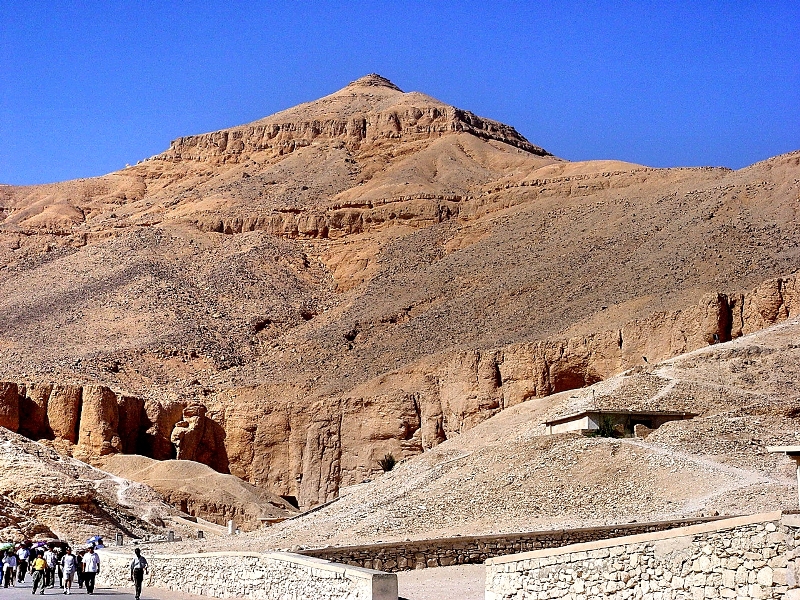
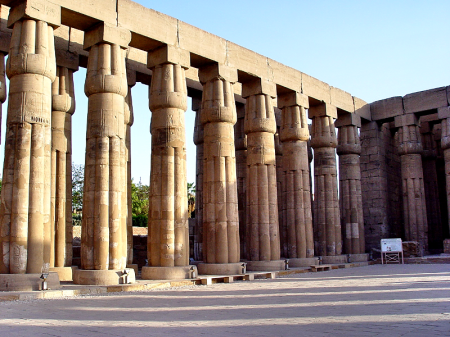
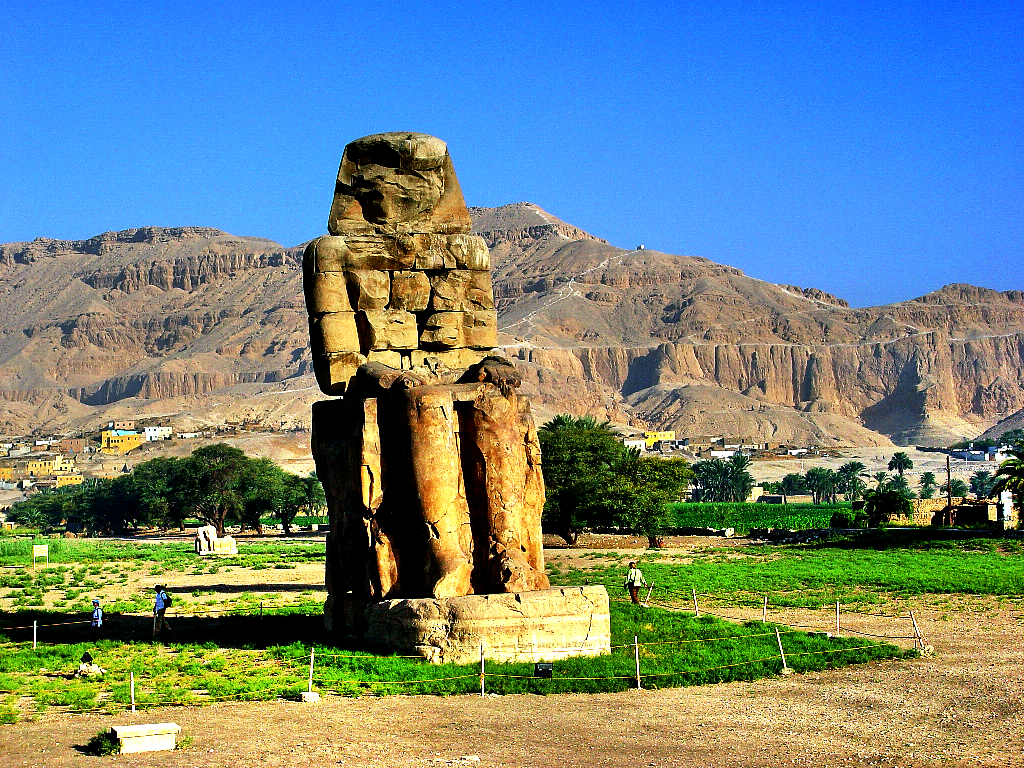
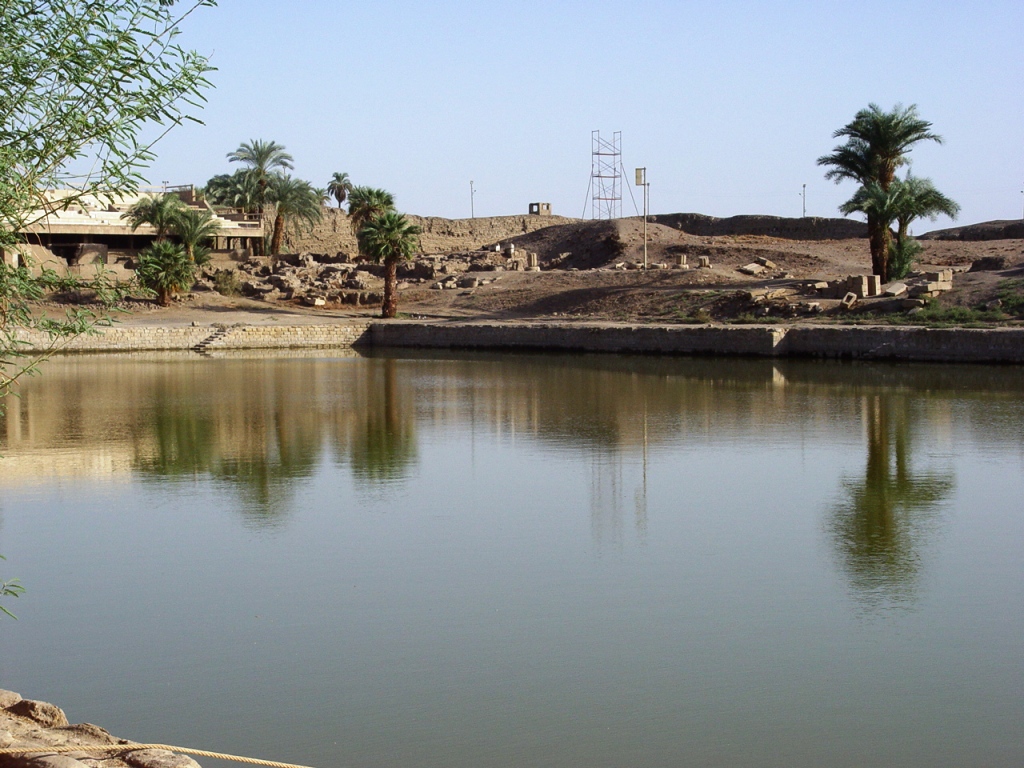
artefakti
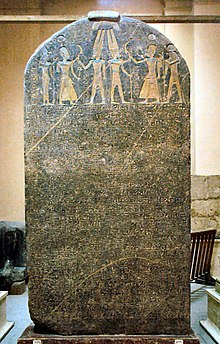
Merenptahova stela
Merneptahova stela, također poznata kao Izraelska stela ili Pobjednička stela Merneptaha, je natpis od strane Merneptaha, faraona u starom Egiptu koji je vladao od 1213. do 1203. pr. Kr. Otkriće Flindersa Petrieja u Tebi 1896. godine, sada se nalazi u Egipatskom muzeju u Kairu.
Tekst je uglavnom izvještaj o Merneptahovoj pobjedi nad drevnim Libijcima i njihovim saveznicima, ali posljednje tri od 28 linija bave se zasebnom kampanjom u Kanaanu, tada dijelom egipatskih imperijalnih posjeda. Ponekad se naziva "Izraelska stela" jer većina znanstvenika prevodi skup hijeroglifa u liniji 27 kao "Izrael". Alternativni prijevodi su predloženi, ali nisu široko prihvaćeni.
Stela predstavlja najraniji tekstualni spomen Izraela i jedini spomen iz starog Egipta. To je jedan od četiri poznata natpisa iz željeznog doba koji datiraju iz vremena i spominju drevni Izrael po imenu, s ostalima koji su Meša stela, Tel Dan stela i Kurkh monoliti. Posljedično, neki smatraju Merneptahovu stelu najpoznatijim Petriejevim otkrićem, s čime se i sam Petrie složio.
Wikipedia
Karta
informacije iz rječnika
No
or No-A'mon, the home of Amon, the name of Thebes, the ancient capital of what is called the Middle Empire, in Upper or Southern Egypt. "The multitude of No" (Jer 46:25) is more correctly rendered, as in the Revised Version, "Amon of No", i.e., No, where Jupiter Amon had his temple. In (Ezek 30:14; 30:16) it is simply called "No;" but in (Ezek 30:15) the name has the Hebrew Hamon prefixed to it, "Hamon No." This prefix is probably the name simply of the god usually styled Amon or Ammon. In (Nah 3:8 ) the "populous No" of the Authorized Version is in the Revised Version correctly rendered "No-Amon."
It was the Diospolis or Thebes of the Greeks, celebrated for its hundred gates and its vast population. It stood on both sides of the Nile, and is by some supposed to have included Karnak and Luxor. In grandeur and extent it can only be compared to Nineveh. It is mentioned only in the prophecies referred to, which point to its total destruction. It was first taken by the Assyrians in the time of Sargon (Isa 20:1etc.). It was afterwards "delivered into the hand" of Nebuchadnezzar and Assurbani-pal (Jer 46:25; 46:26). Cambyses, king of the Persians (B.C. 525), further laid it waste by fire. Its ruin was completed (B.C. 81) by Ptolemy Lathyrus. The ruins of this city are still among the most notable in the valley of the Nile. They have formed a great storehouse of interesting historic remains for more than two thousand years.
"As I wandered day after day with ever-growing amazement amongst these relics of ancient magnificence, I felt that if all the ruins in Europe, classical, Celtic, and medieval, were brought together into one centre, they would fall far short both in extent and grandeur of those of this single Egyptian city." Manning, The Land of the Pharaohs.
EBD - Easton's Bible Dictionary