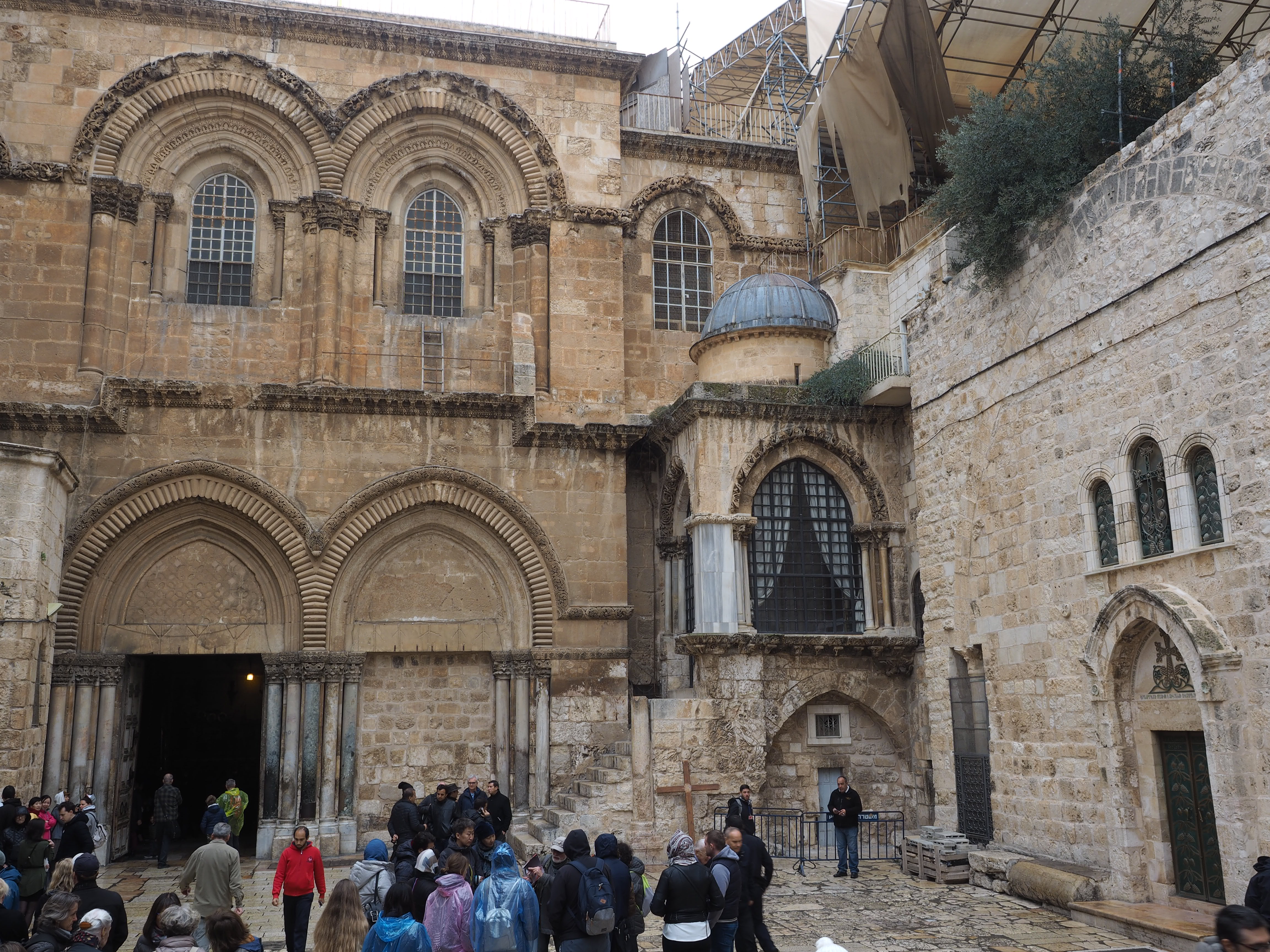
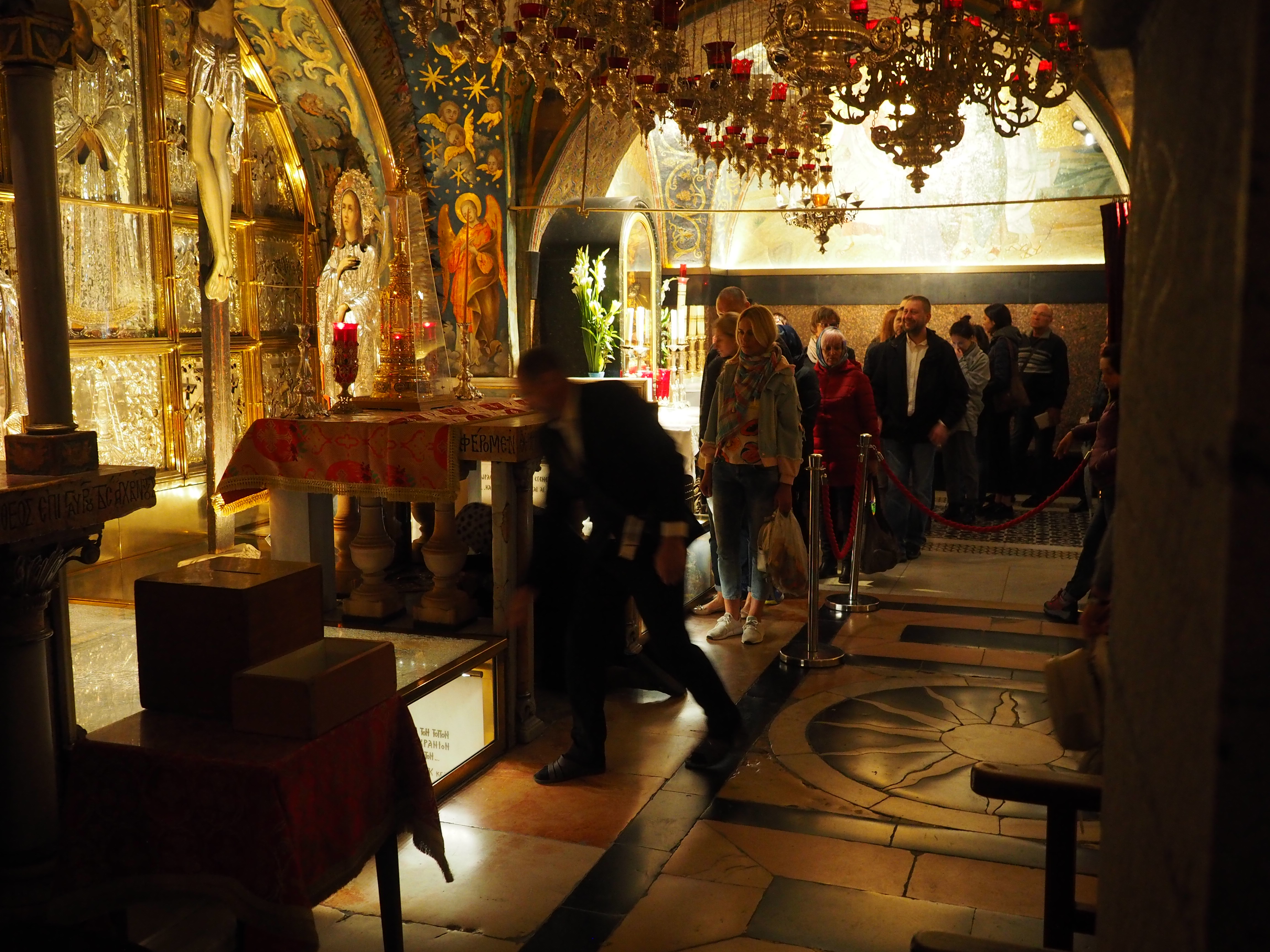
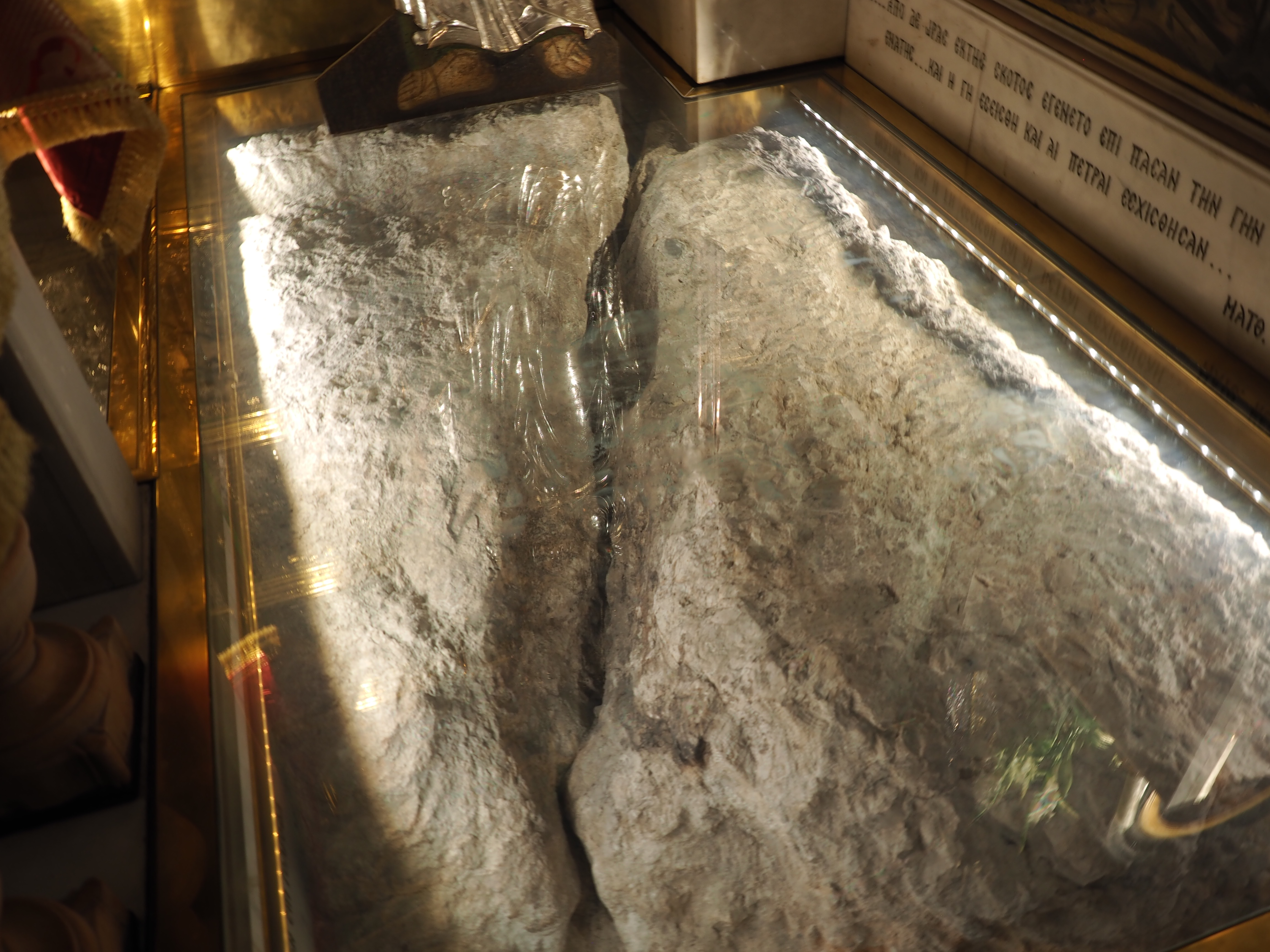
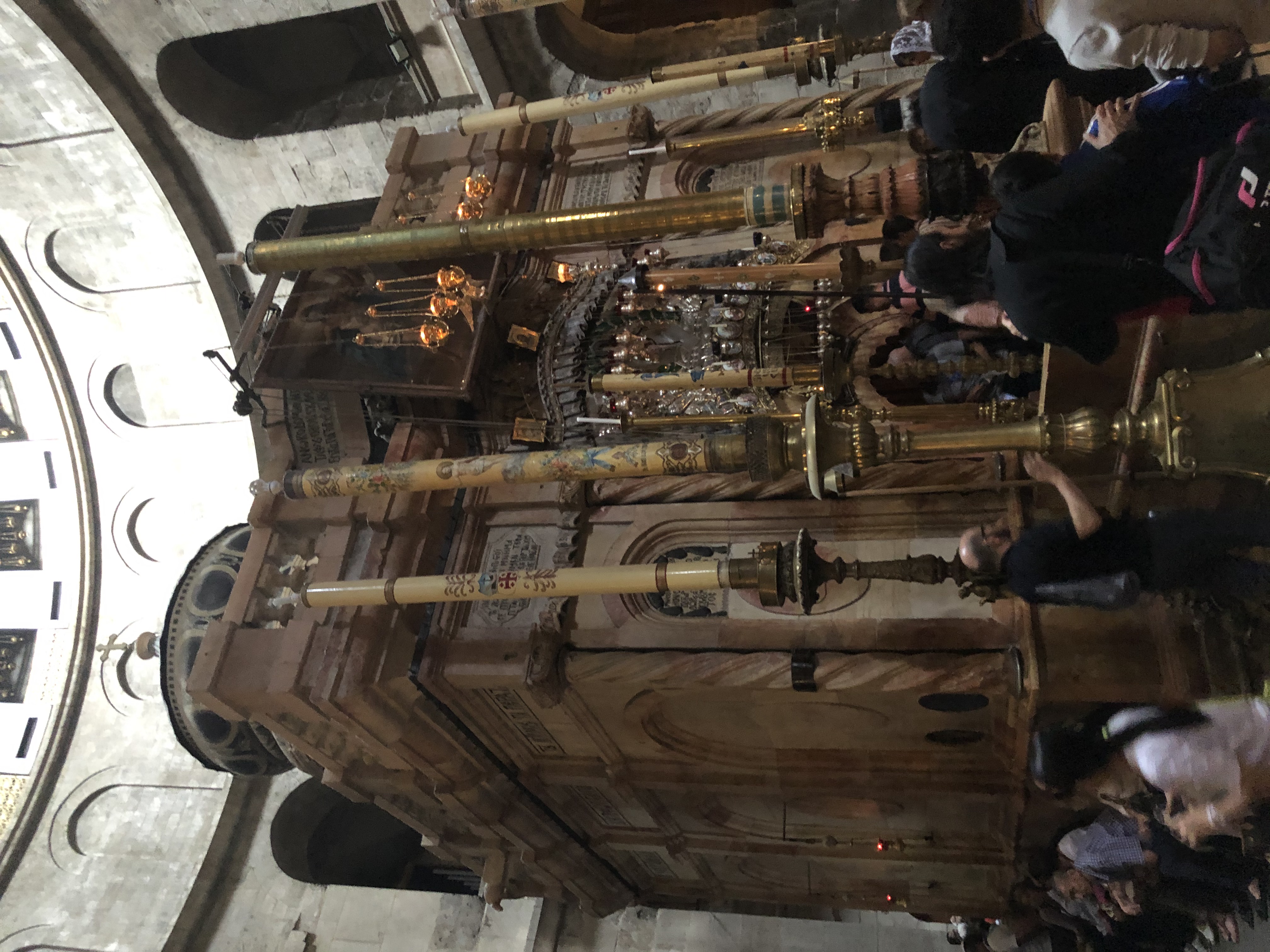
Grob Isusa Krista
Opis
Golgota
uobičajeni naziv mjesta gdje je Isus bio razapet. Evanđelisti ga tumače kao "mjesto lubanje" [Mt 27:33 ; Mk 15:22 ; Iv 19:17 ]. Ovo ime predstavlja aramejsku riječ Gulgaltha, koja je hebrejska Gulgoleth [Br 1:2 ; 1 Ljet 23:3, 24; 2 Kr 9:35], što znači "lubanja." Identično je s riječju Kalvarija. Bio je to mali brežuljak zaobljen poput gole lubanje. Iz evanđelja je očito da je to bilo dobro poznato mjesto izvan vrata (usporedi [Heb 13:12 ]), i blizu grada [Lk 23:26 ], s "vrtom" [Iv 19:41 ], te na prometnici koja vodi u unutrašnjost. Stoga je neodrživa ideja da je uključeno unutar sadašnje "Crkve Svetog Groba." Brežuljak iznad Jeremijine spilje, sjeverno od grada, vrlo je vjerojatno pravo mjesto Kalvarije. Lubanjski izgled stijene na južnoj litici brežuljka vrlo je upečatljiv.
poveznice
Street View
slike
video
Church of Holy Sepulchre History
Church of Holy Sepulchre History, Death, Burial, Resurrection of Jesus Christ, Golgotha, Calvary
Church of Holy Sepulchre History Part 2: Death, Burial, Resurrection of Christ, Golgotha, Calvary
A Video Tour inside The Church of the Holy Sepulchre in Jerusalem
Jesus' Tomb Explained--the evidence & the story!
Where Jesus Was Crucified: The archaeological evidence!
Archaeological Proof for the Crucifixion and Burial Tomb of Jesus Christ. Joel Kramer, SourceFlix.
Karta
informacije iz rječnika
Golgotha
the common name of the spot where Jesus was crucified. It is interpreted by the evangelists as meaning "the place of a skull" (Matt 27:33; Mark 15:22; John 19:17). This name represents in Greek letters the Aramaic word Gulgaltha, which is the Hebrew Gulgoleth (Num 1:2; 1Chr 23:3; 23:24; 2Kings 9:35), meaning "a skull." It is identical with the word Calvary (q.v.). It was a little knoll rounded like a bare skull. It is obvious from the evangelists that it was some well-known spot outside the gate [comp. (Heb 13:12 )], and near the city (Luke 23:26), containing a "garden" (John 19:41), and on a thoroughfare leading into the country. Hence it is an untenable idea that it is embraced within the present "Church of the Holy Sepulchre." The hillock above Jeremiah's Grotto, to the north of the city, is in all probability the true site of Calvary. The skull-like appearance of the rock in the southern precipice of the hillock is very remarkable.
EBD - Easton's Bible Dictionary