メシャ石碑
説明
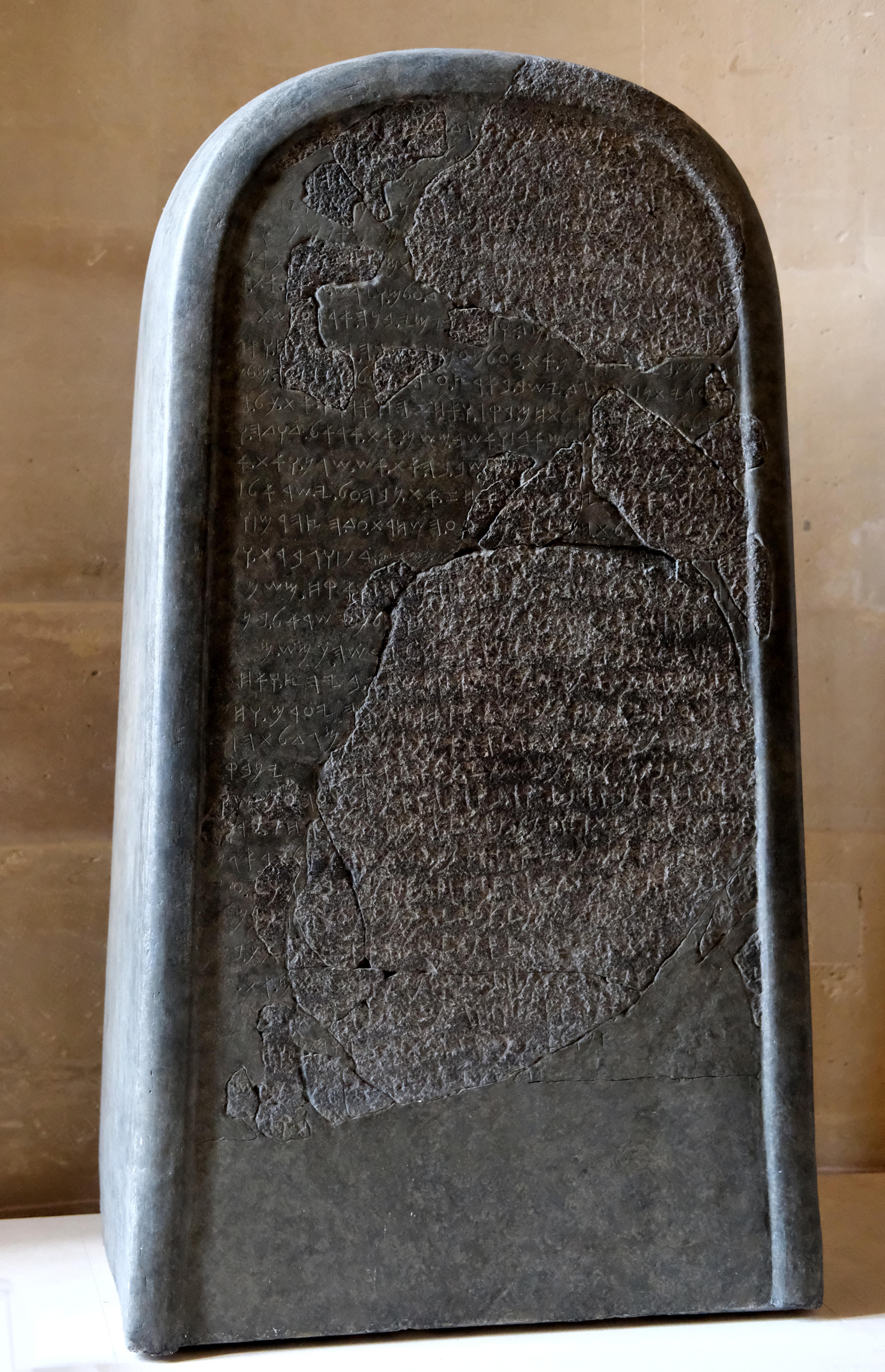
メシャ石碑、別名モアブ石碑は、紀元前840年頃に遡る石碑で、モアブ王メシャの名のもとに重要なカナン語の碑文が刻まれています(モアブは現代のヨルダンに位置する王国)。メシャは、モアブの神ケモシュが彼の民に怒り、彼らをイスラエル王国に従属させたが、やがてケモシュが戻り、メシャを助けてイスラエルの支配を打ち破り、モアブの地を回復したと語っています。メシャはまた、彼の多くの建設プロジェクトについても記しています。これは、フェニキア文字の変種で書かれており、古代ヘブライ文字に密接に関連しています。
この石は、1868年8月に古代ディボン(現在のヨルダンのディバン)で、英国国教会の宣教師フレデリック・オーガスタス・クラインによって無傷の状態で発見されました。地元のアラブ人が、エルサレムのフランス領事館に拠点を置く考古学者シャルル・シモン・クレルモン=ガノーのために「スクイーズ」(紙製の印象)を取得しました。翌年、オスマン帝国の当局が石碑をドイツに渡すようベドウィンに圧力をかけたことに対する反抗として、バニ・ハミダ族によって石碑はいくつかの断片に砕かれました。クレルモン=ガノーは後に断片を入手し、石碑の破壊前に作られた印象のおかげでそれらを組み立てることができました。
メシャ石碑は、パレスチナ地域で発見された最初の主要なカナン語の碑文であり、この地域で発見された最も長い鉄器時代の碑文であり、モアブ語の主要な証拠であり、「セム語碑文学の基盤」と歴史を成しています。この石碑は、聖書の列王記のエピソードといくつかの違いを持ちながらも並行する物語を持ち、紀元前9世紀のある時点でのモアブとイスラエルの政治的関係についての貴重な情報を提供しています。それは、イスラエル王国(「オムリの家」)に言及する最も広範な碑文であり、イスラエルの神ヤハウェへの最も古い確実な聖書外の言及を含んでいます。また、イスラエルの名を含む4つの既知の同時代の碑文の1つであり、他にはメルネプタハ石碑、テル・ダン石碑、クルクのモノリスの1つがあります。その信憑性は長年にわたって議論されてきましたが、聖書のミニマリストの中には、テキストが歴史的ではなく、聖書の寓話であると示唆する者もいます。しかし、石碑自体は、今日の聖書考古学者の大多数によって本物で歴史的なものと見なされています。
この石碑は、1873年以来、フランスのパリにあるルーヴル美術館のコレクションの一部となっています。ヨルダンは2014年からその起源地への返還を要求しています。
リンク
写真
ビデオ
Moabite Stone (Mesha Stele)
辞書からの情報
Mesha
middle district, Vulgate, Messa.
(1.) A plain in that part of the boundaries of Arabia inhabited by the descendants of Joktan (Gen 10:30).
(2.) Heb. meysh'a, "deliverance," the eldest son of Caleb (1Chr 2:42), and brother of Jerahmeel.
(3.) Heb. id, a king of Moab, the son of Chemosh-Gad, a man of great wealth in flocks and herds (2Kings 3:4). After the death of Ahab at Ramoth-Gilead, Mesha shook off the yoke of Israel; but on the ascension of Jehoram to the throne of Israel, that king sought the help of Jehoshaphat in an attempt to reduce the Moabites again to their former condition. The united armies of the two kings came unexpectedly on the army of the Moabites, and gained over them an easy victory. The whole land was devastated by the conquering armies, and Mesha sought refuge in his last stronghold, Kir-harasheth (q.v.). Reduced to despair, he ascended the wall of the city, and there, in the sight of the allied armies, offered his first-born son a sacrifice to Chemosh, the fire-god of the Moabites. This fearful spectacle filled the beholders with horror, and they retired from before the besieged city, and recrossed the Jordan laden with spoil (2Kings 3:25-27).
The exploits of Mesha are recorded in the Phoenician inscription on a block of black basalt found at Dibon, in Moab, usually called the "Moabite stone" (q.v.).
EBD - Easton's Bible Dictionary