테베
링크
Street View
사진
유물
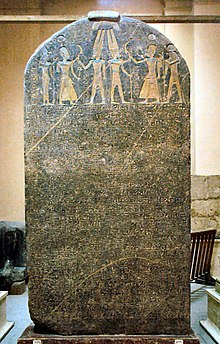
므르넵타 석비
므네프타 스텔레, 이스라엘 스텔레 또는 므네프타의 승리 스텔레로도 알려진 이 비문은 기원전 1213년부터 1203년까지 통치했던 고대 이집트의 파라오 므네프타에 의해 작성되었습니다. 1896년 플린더스 페트리에 의해 테베에서 발견되었으며, 현재 카이로의 이집트 박물관에 소장되어 있습니다.
이 텍스트는 주로 고대 리비아인과 그 동맹국에 대한 므네프타의 승리를 기록하고 있지만, 28줄 중 마지막 세 줄은 당시 이집트 제국의 영토였던 가나안에서의 별도의 캠페인을 다루고 있습니다. 27번째 줄의 상형문자를 "이스라엘"로 번역하는 학자들이 많아 "이스라엘 스텔레"라고도 불립니다. 대안 번역이 제시되었지만 널리 받아들여지지는 않았습니다.
이 스텔레는 이스라엘에 대한 가장 초기의 문자적 언급을 나타내며 고대 이집트에서의 유일한 언급입니다. 철기 시대에 고대 이스라엘을 이름으로 언급한 네 개의 알려진 비문 중 하나로, 다른 것은 메사 스텔레, 텔 단 스텔레, 그리고 쿠르크 모놀리스입니다. 따라서 일부 사람들은 므네프타 스텔레를 페트리의 가장 유명한 발견으로 간주하며, 페트리 자신도 이에 동의했습니다.
위키피디아
지도
사전에서의 정보
No
or No-A'mon, the home of Amon, the name of Thebes, the ancient capital of what is called the Middle Empire, in Upper or Southern Egypt. "The multitude of No" (Jer 46:25) is more correctly rendered, as in the Revised Version, "Amon of No", i.e., No, where Jupiter Amon had his temple. In (Ezek 30:14; 30:16) it is simply called "No;" but in (Ezek 30:15) the name has the Hebrew Hamon prefixed to it, "Hamon No." This prefix is probably the name simply of the god usually styled Amon or Ammon. In (Nah 3:8) the "populous No" of the Authorized Version is in the Revised Version correctly rendered "No-Amon."
It was the Diospolis or Thebes of the Greeks, celebrated for its hundred gates and its vast population. It stood on both sides of the Nile, and is by some supposed to have included Karnak and Luxor. In grandeur and extent it can only be compared to Nineveh. It is mentioned only in the prophecies referred to, which point to its total destruction. It was first taken by the Assyrians in the time of Sargon (Isa 20:1etc.). It was afterwards "delivered into the hand" of Nebuchadnezzar and Assurbani-pal (Jer 46:25; 46:26). Cambyses, king of the Persians (B.C. 525), further laid it waste by fire. Its ruin was completed (B.C. 81) by Ptolemy Lathyrus. The ruins of this city are still among the most notable in the valley of the Nile. They have formed a great storehouse of interesting historic remains for more than two thousand years.
"As I wandered day after day with ever-growing amazement amongst these relics of ancient magnificence, I felt that if all the ruins in Europe, classical, Celtic, and medieval, were brought together into one centre, they would fall far short both in extent and grandeur of those of this single Egyptian city." Manning, The Land of the Pharaohs.
EBD - Easton's Bible Dictionary