Tēbas
saites
Street View
attēli
artefakti
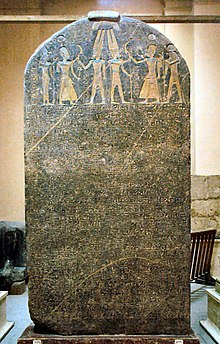
Merneptaha stēla
Merneptaha stēla, pazīstama arī kā Izraēla stēla vai Merneptaha uzvaras stēla, ir uzraksts, ko veicis Merneptahs, senās Ēģiptes faraons, kurš valdīja no 1213. līdz 1203. gadam p.m.ē. To 1896. gadā Tēbās atklāja Flinderss Petrī, un tagad tā atrodas Ēģiptes muzejā Kairā.
Teksts galvenokārt ir par Merneptaha uzvaru pār senajiem lībiešiem un viņu sabiedrotajiem, bet pēdējās trīs no 28 rindiņām attiecas uz atsevišķu kampaņu Kanaānā, kas tajā laikā bija Ēģiptes impērijas īpašums. Dažkārt to dēvē par "Izraēla stēlu", jo lielākā daļa zinātnieku tulko hieroglifu kopu 27. rindiņā kā "Izraēla". Ir piedāvāti alternatīvi tulkojumi, taču tie nav plaši pieņemti.
Stēla ir agrākais tekstuālais atsauce uz Izraēlu un vienīgā atsauce no senās Ēģiptes. Tā ir viena no četrām zināmām dzelzs laikmeta uzrakstiem, kas datēti ar laiku un piemin senās Izraēlas vārdu, pārējās ir Mešas stēla, Tel Dānas stēla un Kurkas monolīti. Tādēļ daži uzskata Merneptaha stēlu par Petrī slavenāko atklājumu, ar ko Petrī pats piekrita.
Vikipēdija
Karte
informācija no vārdnīcas
No
or No-A'mon, the home of Amon, the name of Thebes, the ancient capital of what is called the Middle Empire, in Upper or Southern Egypt. "The multitude of No" (Jer 46:25 ) is more correctly rendered, as in the Revised Version, "Amon of No", i.e., No, where Jupiter Amon had his temple. In (Ezek 30:14; 30:16) it is simply called "No;" but in (Ezek 30:15) the name has the Hebrew Hamon prefixed to it, "Hamon No." This prefix is probably the name simply of the god usually styled Amon or Ammon. In (Nah 3:8 ) the "populous No" of the Authorized Version is in the Revised Version correctly rendered "No-Amon."
It was the Diospolis or Thebes of the Greeks, celebrated for its hundred gates and its vast population. It stood on both sides of the Nile, and is by some supposed to have included Karnak and Luxor. In grandeur and extent it can only be compared to Nineveh. It is mentioned only in the prophecies referred to, which point to its total destruction. It was first taken by the Assyrians in the time of Sargon (Isa 20:1etc.). It was afterwards "delivered into the hand" of Nebuchadnezzar and Assurbani-pal (Jer 46:25 ; 46:26). Cambyses, king of the Persians (B.C. 525), further laid it waste by fire. Its ruin was completed (B.C. 81) by Ptolemy Lathyrus. The ruins of this city are still among the most notable in the valley of the Nile. They have formed a great storehouse of interesting historic remains for more than two thousand years.
"As I wandered day after day with ever-growing amazement amongst these relics of ancient magnificence, I felt that if all the ruins in Europe, classical, Celtic, and medieval, were brought together into one centre, they would fall far short both in extent and grandeur of those of this single Egyptian city." Manning, The Land of the Pharaohs.
EBD - Easton's Bible Dictionary